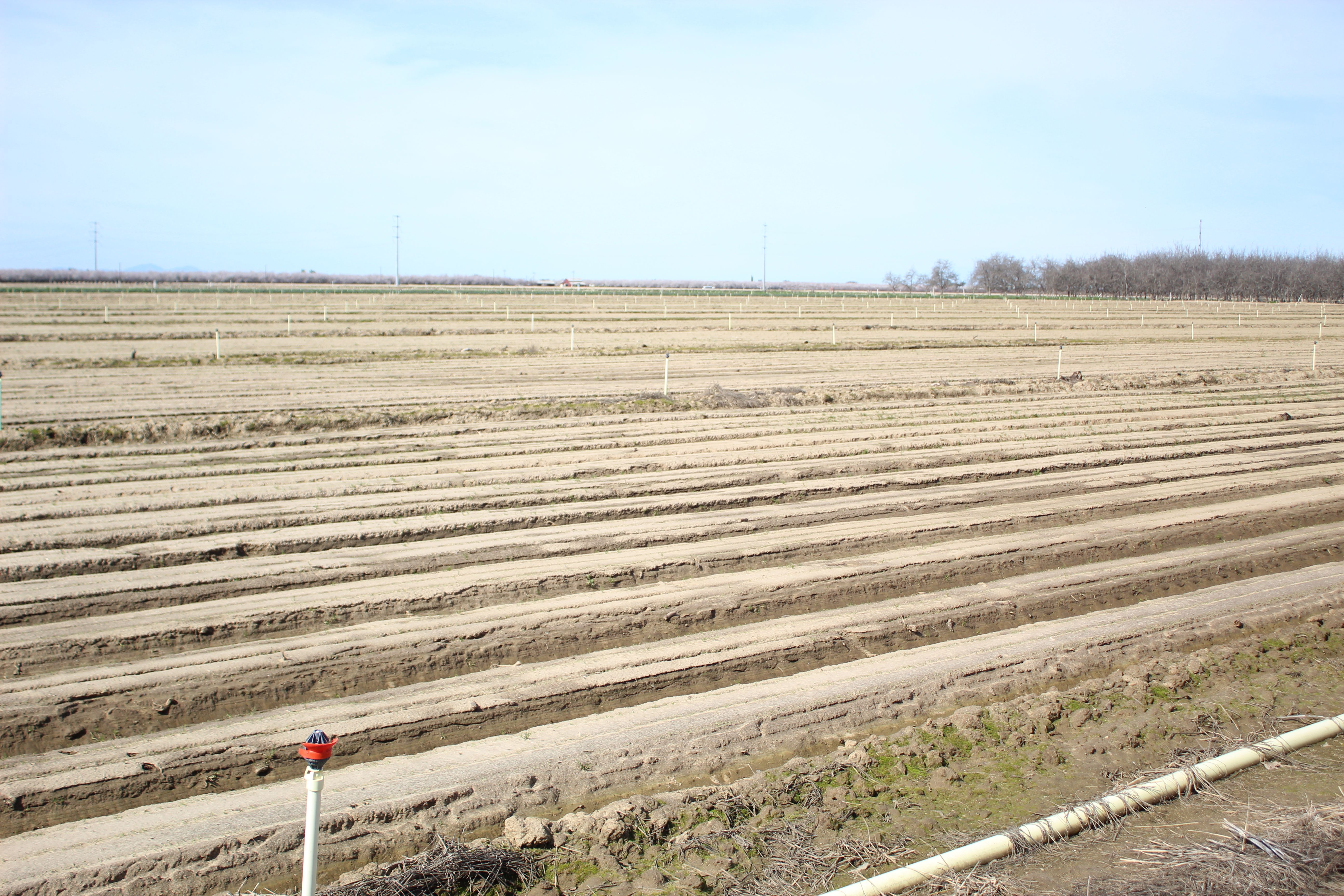
Jason Giannelli has some hard decisions to make. Farming in Kern County, where groundwater restrictions are reshaping what's possible, he's weighing which acres stay in production and which he'll fallow. Knowing he still has to pay taxes on idle ground and carry overhead and financial risk, it's not a decision he takes lightly.
These choices are deliberate, planned well ahead of the season and driven first by determining how much water is realistically available and how reliable it is. From there, everything else, like crop mix, acreage and investment, follows.
As California's Sustainable Groundwater Management Act, or SGMA, moves from long-term mandate to everyday reality, growers like Giannelli across the state are being forced to make planning and investment decisions earlier, with less certainty and fewer workable options. From deciding which acres stay in production to determining how much risk a farm can absorb, water has become the primary constraint shaping agricultural decision-making, often before labor, inputs or market conditions enter the equation.
Nobody wants to leave their ground fallow, because you're still paying taxes on it. It's costing you money whether you're making money from it or not.— Jason Giannelli, Kern County grower
As he looks to prioritize his land, he said they're mainly looking at what ground is most valuable and leaving ground out that's not as valuable to maximize production with less water. Like many other parts of the state, water planning has had to become strategic, and it's being increasingly dictated by continuing groundwater limits rather than annual variability.
Even in years when rain and snowpack appear strong, allocation realities don't always follow. For Giannelli, the question isn't whether water will arrive but how much, and whether that number will be enough to sustain a season.
"Are we going to have 30% allocation? 40%? We're already at 10%," he said.
The unpredictability adds another layer of stress.
"We're looking at the rain and snow and thinking, this doesn't make sense," he said. "We should be at 70% right now."
That disconnect between visible supply and actual allocation forces growers to plan conservatively, often assuming less water than optimism might suggest.
Of course, water uncertainty doesn't stop at the edge of the field, it also follows growers to the bank. In basins facing long-term groundwater limits, lenders are increasingly underwriting acreage based not only on yield potential but on the reliability of its water supply.
"You've got banks not lending money unless you've got enough capital to back yourself up," Giannelli said. "They're not going to loan money on marginal ground."
Efforts to pivot to alternative crops don't necessarily provide relief either, Giannelli said. Financing for new plantings often requires secured contracts and demonstrated market stability, raising the bar for growers attempting to adapt under tightening water constraints. The result is a compounded risk of constrained water allocations, more conservative lending standards and fewer economically viable alternatives, each reinforcing the next and further narrowing operational flexibility.
A Statewide Shift
Giannelli's story isn't unique.
Across California, UC ANR irrigation and soils farm adviser Moneim Mohamed said growers are now putting water at the very front of their planning conversations, often before labor availability, input costs or market conditions.
"Water is the first thought in the grower plan," Mohamed said. "Growers are asking, 'How much water do I realistically have, and how reliable is it?' Once that's clear, they can decide acreage, crop load strategy and how aggressive they can be with other inputs."
The shift has pushed many decisions that were once adjusted midseason into the months before planting even begins. Mohamed said growers are increasingly building entire seasonal strategies around expected allocations and pumping constraints instead of hoping to adapt later.
He said a lot of the midseason adjustments are now being decided preseason.
"Growers are asking, 'What's my likely allocation? What are my pumping constraints? How much risk am I willing to take?' Then they build a seasonal strategy around that," he said.
As water becomes more limited or uncertain, Mohamed said growers are also prioritizing orchards and fields more aggressively than in the past. Decisions are being driven by crop value, orchard age and overall risk, with lower-performing or higher-risk blocks often receiving less water or being considered for removal.
Those collective pressures are also shaping longer-term investment decisions. While growers continue to invest in projects that improve water productivity, Mohamed said many are holding back on expansion or major redevelopment when the water outlook remains unclear.
"I'm seeing growers invest in system upgrades, automation and monitoring," he said. "But they hesitate on expansions or major redevelopment if the water outlook is still unclear."
The result, Mohamed said, is a growing focus on fewer acres managed more intensively, with the goal of reducing risk rather than maximizing footprint.
"Some growers are reducing the acres they farm at peak intensity and focusing resources on fewer, better blocks to reduce risk," he said.
Planning Amid Uncertainty
Growers are no longer planning around a number; they're planning around uncertainty. As planning decisions move earlier and flexibility narrows, access to timely, accurate water information has become its own challenge. For many growers, staying current on groundwater allocations, pricing and policy updates requires time they just don't have during the season.
That's a gap Tomo Kumahira set out to address when he co-founded WaterOne.AI. The company attends GSA and water board meetings on behalf of its users and distills hours of discussion into short summaries, podcasts and a searchable database growers can reference when questions arise.
"They can get accurate information without having to sit through three hours of meetings," Kumahira said.
One of the platform's tools, called ChatGSA, allows users to ask specific questions drawn from verified meeting records, such as deadlines, eligibility requirements or policy updates. Some growers, including Giannelli, are already using the tool to track how groundwater agencies across the region are approaching their plans.
"It just helps me see what is going on in other GSAs, how they are handling their plans and whether the decisions are going in the right direction," Giannelli said.
Kumahira said the goal isn't to replace direct engagement with GSAs but to help growers filter information quickly and decide when follow-up conversations are necessary.
"Sometimes you just want to ask a very simple question, like when is the deadline," he said. "Instead of trying to chase someone for days, you can start there."
He and his co-founder, Ryo Takanashi, personally review meeting transcripts to ensure accuracy before summaries are released, but Kumahira is careful to emphasize that WaterOne.AI is designed as a decision-support tool and isn't a substitute for human judgment.
"Our stance is not that AI is universally useful, it has its own limitations," Kumahira said. "That's why we spend time reviewing the transcripts and double checking anything that doesn't sound right."
He also stressed the importance of maintaining a constructive relationship with GSAs, noting that most agencies are actively trying to engage growers and work through challenges collaboratively.
"Our goal is not to attack GSAs or agencies," he said. "Most of the time, they're working really hard to reach out to growers, and it's a win for everyone when those conversations happen sooner rather than later."
For growers already planning around uncertainty rather than fixed numbers, Kumahira said tools that streamline information can help reduce delays and support more confident decision-making, especially when water availability ultimately determines how much risk a farm can afford to take.
Taken together, these perspectives show a structural shift in California agriculture. Farming fewer acres, deploying capital more cautiously and making decisions earlier aren't temporary adjustments anymore but part of a new operating model shaped by groundwater limits.
"We've been planning for it for a while," Giannelli said. "It's not reactive. It's just how can we keep things running while dealing with SGMA."