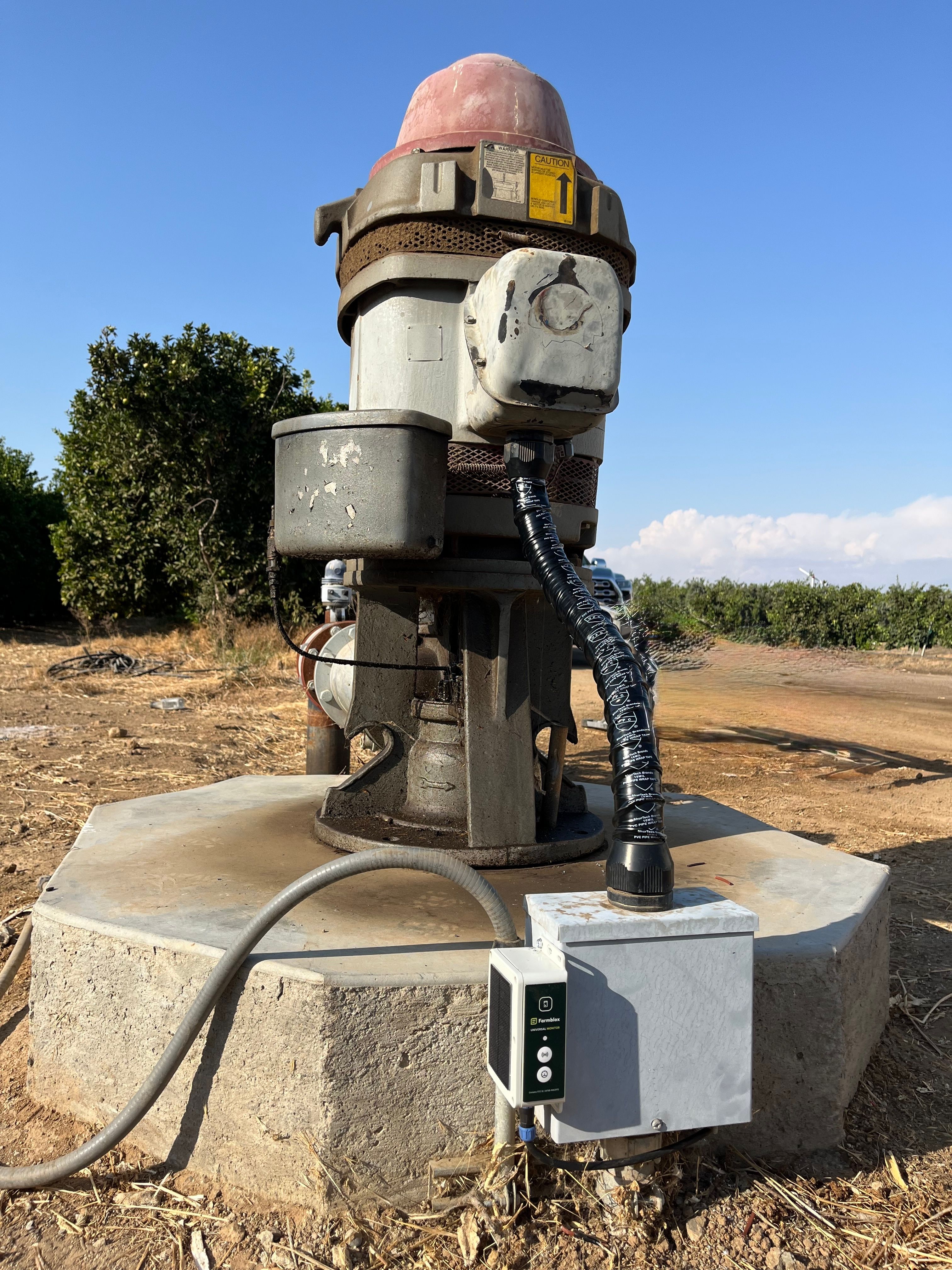
Agricultural theft has become one of the most persistent and costly threats to California farmers, particularly across the Central Valley, and experts say the crisis is taking a heavier toll each year. After all, what used to be considered an unavoidable nuisance has now evolved into a widespread economic menace, straining farmers, insurers and law enforcement agencies alike. The financial fallout reaches far beyond the farm.
Theft losses cause costly downtime, delayed harvests, higher repair bills, labor inefficiencies and elevated insurance premiums. In some counties, the economic impact even threatens long-term operational stability for growers.
"It's not a question of who's been affected," said Ryan Jacobsen, CEO of the Fresno County Farm Bureau and a fourth-generation farmer. "It's who hasn't been affected at this point because it's so widespread and prevalent."
In Tulare County, a region with more than $8 billion in annual agricultural production, Lt. Rady Gunderman, who leads the Sheriff's Ag Crimes Investigations Unit, sees clear seasonal patterns.
"As we go into winter, battery and fuel thefts from wind machines are increasing," Gunderman said. "As we head into the spring, beehives will be targeted. Equipment and vehicle theft is constant and copper wire theft doesn't stop."
The same trends are appearing throughout the Central Valley, including in Fresno, Kings, Kern and Stanislaus counties, which are major hot spots for metal and equipment theft. Gunderman noted the farther farms sit from main roads, the more emboldened criminals become.
Copper Theft Has Become More Destructive
Copper wire theft remains the No. 1 and most damaging crime across the region.
"Criminals are still committing the same types of theft with the same type of tactics," said Bobby Rader, a 16-year law enforcement veteran and one of California's top ag crime experts. "The biggest change is the amount of damage. Over the last 10 years, we've seen them using vehicles to rip the copper out of the ground, which results in massive and very expensive damage to the infrastructure."
Jacobsen has watched the same trend unfold in Fresno County.
"On average, they're going to steal $20,000 to $60,000 worth of copper," he said. "But the damage can cost anywhere from $2,000 to $15,000 to repair because of the complexities of going back and putting the wire back in."
In many cases, the metal itself is worth less than the destruction left behind, which includes broken pumps, mangled wiring systems, disabled irrigation sites and halted operations. Those secondary losses can sometimes exceed the value of the crop itself, especially for high-water-demand commodities like almonds, citrus and grapes.
Organized Crews Target High-Value Equipment
While many thefts are opportunistic crimes, the most profitable operations are run by organized crews who know the equipment they're after.
"The reason ag equipment is targeted can be attributed to a couple of things," Gunderman said. "It's expensive to purchase, continues to increase in value, and it's versatile. Small tractors, construction equipment, they all hold value."
But it's not just your run-of-the-mill bad guy doing the crime. The crews stealing them are usually highly knowledgeable.
"They're employing people who know equipment makes, models and operations," Gunderman said. "They go after newer, low-hour equipment and know where factory-installed GPS units are attached. They remove them on site, move the equipment, let the trail go cold and then load them into unconventional tractor trailers for transport."
These thefts aren't limited to Tulare. Kern, Kings and Stanislaus counties have seen similar incidents, often linked across county lines. That's why Tulare participates in the statewide California Rural Crime Prevention Task Force and a regional partnership with Fresno, Kings and Kern counties.
"With the networking we've created, we have great relationships with agencies across the state and are able to get assistance when needed," Gunderman said.
Why Many Thefts Go Undetected
One of the biggest challenges for deputies in fighting ag theft is timing.
"Often the realization of the theft is days or weeks old by the time it's reported," Gunderman said. "Evidence has disappeared or been damaged, or it simply isn't reported at all. If we don't know, we can't help and it becomes harder to establish patterns."
That delay gives criminals a wide window of opportunity. Rader noted thieves know that remote farms create perfect cover.
"I've interviewed these criminals countless times," he said. "They tell me, 'I'm not worried. Nobody can hear me. I'm surrounded by almonds or grapes or walnuts. The cops won't even get involved for weeks because the farmer won't know until they drive by and see it.'"
Their confidence has only grown in recent years, and that makes things even more worrisome.
The Financial Fallout
The cost of stolen property is only the beginning.
"The financial impacts are massive and difficult to describe," Rader said. "They're so big and so common that we're seeing insurers leave the state. Deductibles are rising to a level where each farmer has to decide at what level they self-insure."
That can be devastating and can ruin a farm for good.
"I know farmers personally who've had $50,000, $80,000, $100,000 thefts that they paid for out of pocket because they'd probably be dropped as a client once it's paid," Rader said.
For that reason, many growers simply opt out of filing claims altogether, preferring to absorb the loss rather than risk rate hikes or policy cancellations.
Law enforcement budgets are stretched thin as well, so there's not always enough money to fight the problem.
"We spend an enormous amount of resources on manpower, time and equipment trying to combat ag crime and help farmers," Rader said. "There are maybe 15 ag crime units in the state of California."
Farmers Fortify Their Properties
Growers are using every tool available to protect their operations, but it's not always enough. That's why more and more are investing in new ways to deter the thieves.
"Harden your target," Gunderman said. "Locks, fences, lights, cameras, alarms, guard dogs. If your place is a fortress, the criminal may bypass it."
Jacobsen recommended other ways farmers can protect themselves, including installing concrete sleeves and barriers on pumps, switching from copper to aluminum wiring, applying unique paint or owner-applied numbers to metal equipment, using GPS tracking on high-value equipment, or adding camera systems with cellular connectivity.
But even with these precautions, Jacobsen noted theft trends ebb and flow with commodity prices.
"When copper rises, thefts go up," he said. "There's a very high association with drug users when it comes to metal theft. As prices go up, the willingness to steal increases."
After years of feeling one step behind thieves, Rader reached a breaking point.
"Two years ago, 3:30 in the morning, I'm drinking coffee in my kitchen and I'm mad," he said. "Thinking about cases we're working and trying to find a solution."
He sketched an idea on a napkin, a tamper-triggered alert system that would notify farmers and law enforcement the instant a theft attempt began. That concept became COP-R-LOCK, now being piloted by Farmblox and several large growers.
"What sets COP-R-LOCK apart is that it's the only one of its kind," Rader said. "If you install it throughout your infrastructure, there's no way they can begin cutting wire or opening panels without the system initiating."
The system triggers loud alarms, sends immediate alerts and creates enough panic to disrupt the crime in progress. After all timing is everything.
"Getting law enforcement involved in the first 90 seconds instead of two weeks is an unbelievable game changer," he said. "It gives us a real shot at finding and stopping these criminals before they keep going."
Rader hopes COP-R-LOCK sparks a broader technological wave.
"My hope is that people recognize what we've done and build new ideas," he said. "There's been a lack of innovation in the ag crime space because nobody considered it a space. People just got used to it."
Jacobsen agrees that growers want to see proven solutions like this and that technology could eventually help reverse crime trends if tools are reliable.
While Gunderman sees promise in a future where farmers have stronger defenses and law enforcement can respond in real time rather than long after the fact, he knows that technology alone isn't going to be the answer.
California's policy choices, particularly bail reforms and sentencing guidelines, have reduced deterrence and emboldened repeat offenders.
"With reduced sentences, zero bail and little to no consequences, the criminal element has all the opportunity," Gunderman said. "Insurance premiums will climb, cost of goods will elevate and the bottom line for the producer will decrease."
A Crisis Too Costly to Ignore
As theft becomes more brazen and more organized, California agriculture is confronting an uncomfortable truth: the economic stakes are rising faster than the solutions.
The impact, from stolen copper to six-figure repairs, from rising insurance premiums to law enforcement strain, ripples across the entire rural economy. For now, growers, law enforcement and innovators are fighting the same battle from different angles, fortifying properties, building technology, coordinating across counties and pushing for policy changes, hoping to create a better world for the farmers.