Escalating tensions in the Middle East are no longer a distant geopolitical concern for U.S. agriculture, they are increasingly showing up in fertilizer invoices, procurement strategies and, ultimately, grower decision-making.
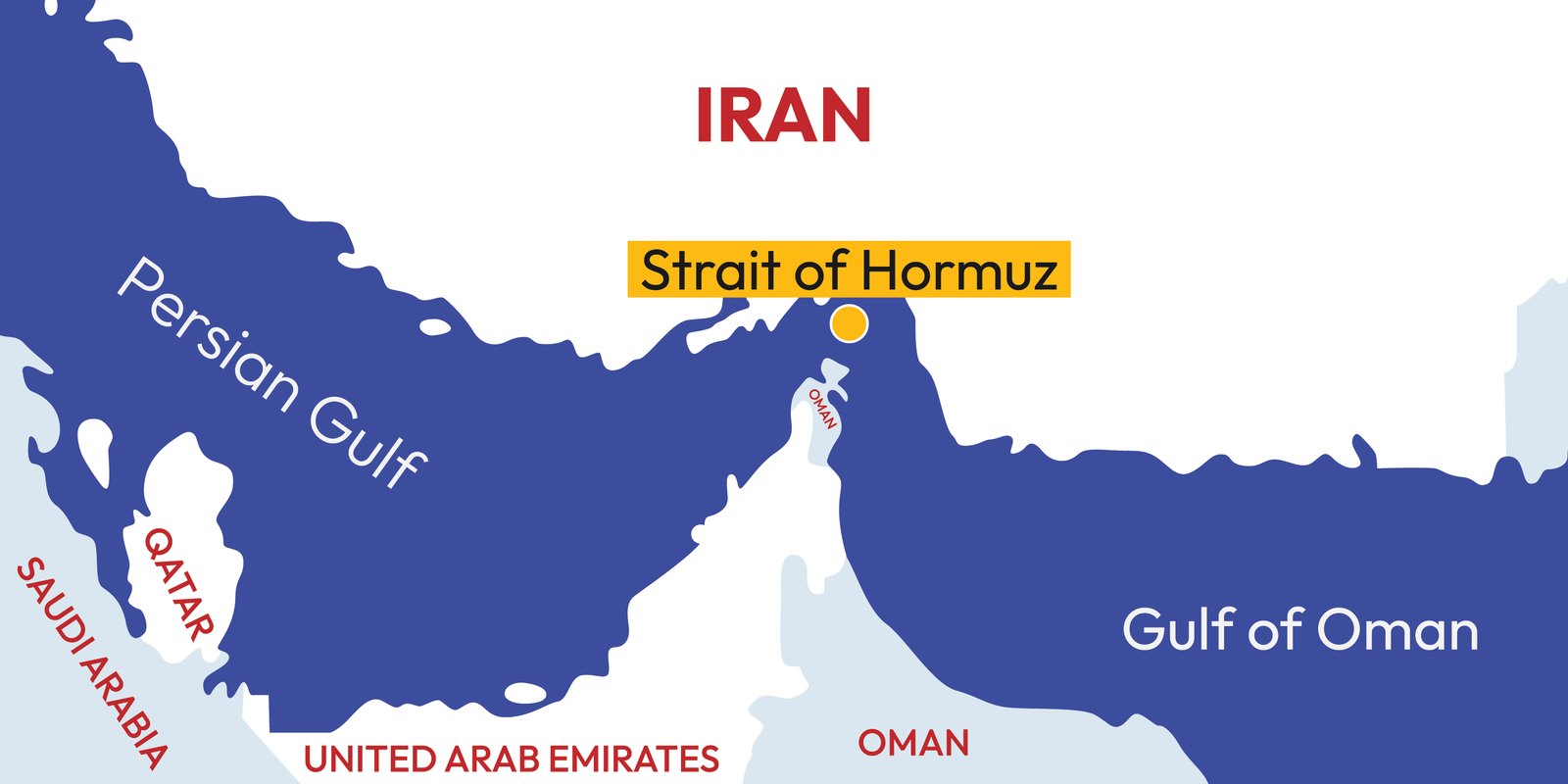
The conflict involving Iran has injected a new level of volatility into global fertilizer markets, largely due to disruptions tied to the Strait of Hormuz, one of the world’s most critical shipping chokepoints. A significant portion of global fertilizer trade, including urea and sulfur, moves through that corridor and any interruption has immediate ripple effects.
According to estimates by The Fertilizer Institute, roughly 40% of global urea exports and more than half of sulfur exports pass through the strait, creating widespread concern about supply availability.
“There’s a huge impact with such a large volume of fertilizer produced out of that region,” said Corey Rosenbusch, president and CEO of The Fertilizer Institute. “[As of early April], disruptions have already driven noticeable increases in global prices.”
Even though the United States does not directly import significant volumes of fertilizer from Iran, the global nature of the market means domestic prices are still heavily impacted.
“Iran is the largest exporter of urea in the world,” Rosenbusch said. “It is a global commodity, so it affects growers right here.”
At the same time, the U.S. supply chain is facing its own constraints. Rosenbusch noted that while ammonia imports are largely sourced from Canada and Trinidad, urea imports are more exposed to global trade flows, including those affected by Middle East disruptions.
“The result is a tightening global market that is pushing prices higher and increasing uncertainty heading into key growing seasons,” he said.
Prices Spike and Supply Tightens
As spring arrived, California growers started seeing the effects show up both in price spikes and growing concerns about availability.
Chris Gallo, vice president of strategy and innovation at Deerpoint Group and a board member of the California Fertilizer Foundation, noted the current volatility echoes the disruptions seen during earlier global crises.
“It kind of goes back to 2022,” Gallo said. “The Russia war spiked fertilizer prices, and that really set a new baseline for volatility.”
Back then, nitrogen prices doubled, rising from roughly $300 to $350 per ton to as high as $600 to $650 per ton. While the markets eventually stabilized, the latest geopolitical shock has once again disrupted that equilibrium.
“When you fast forward to 2026, we were seeing a normal seasonal increase,” Gallo said. “And then all of a sudden overnight, the Iran war threw that into chaos because of the Strait of Hormuz.”
The result has been a rapid escalation in prices, with some nitrogen products jumping big figures in a matter of days in late March.
“Everything happened to where you had a $100 overnight increase,” Gallo said. “And now it’s pushing higher because there’s a concern of whether there’s enough material to supply the market.”
That concern is not unfounded. Globally, disruptions are already affecting procurement. Rosenbusch noted that millions of tons of urea remain unaccounted for in current supply projections, raising questions about where future volumes will come from.
“We still need about a million tons and that just doesn’t seem to be on the books anywhere right now,” he said. “As supply tightens, buyers are competing for available product, further fueling price volatility.”
As supply tightens, buyers are competing for available product, further fueling price volatility.— Corey Rosenbusch, president and CEO, The Fertilizer Institute
California Growers Face Mounting Cost Pressure
In California, where many crops are nitrogen-intensive, rising fertilizer costs are adding to already challenging economics.
James Sayre, a UC Cooperative Extension specialist in agricultural and resource economics at the University of California, Davis, noted the impact is being felt across virtually all major crops.
“Almost every major California crop is nitrogen intensive,” Sayre said, noting that fertilizer typically accounts for 7% to 11% of operating costs.
That share is increasing sharply. For instance, in almonds, fertilizer costs have historically averaged about $400 per acre. A 30% to 45% increase would add another $120 to $180 per acre, an increase that comes at a time when many growers are already operating at a loss.
“With net returns already deeply negative, these cost increases are just going to compound the challenging economics,” Sayre said.
With net returns already deeply negative, these cost increases are just going to compound the challenging economics.— James Sayre, agricultural and resource economics specialist, University of California, Davis
Other crops face similar pressures. Walnuts, processing tomatoes and rice all require significant nitrogen inputs, meaning growers across the state are exposed to higher input costs.
“These shocks are going to hit broadly,” Sayre said.
At the same time, the structure of California agriculture limits growers’ ability to respond through acreage shifts.
“You can’t rethink crop mixes when it comes to permanent crops, you’re rooted,” Gallo said. “That reality makes cost management, rather than production shifts, the primary lever available to growers.”
Efficiency Becomes the New Priority
As fertilizer prices rise, growers are increasingly focused on improving efficiency rather than simply reducing inputs.
Sayre noted it is logical to expect some reduction in nitrogen use, but the changes are more nuanced than across-the-board cuts.
“What growers are doing is sharpening their nitrogen management,” he said. “More precise applications, better timing and avoiding over-application.”
Gallo sees a similar trend, with growers looking for ways to maximize the return on every unit of nitrogen applied.
“The higher the nitrogen price gets, the more open growers are to improving efficiency,” he said. “That includes strategies such as split applications, continuous spoon-feeding of nutrients and the use of products designed to improve uptake efficiency.”
Rather than applying a standard rate, growers are tailoring applications based on crop needs and conditions.
“There’s a push to make sure every unit of nitrogen is maximized,” Gallo said.
However, reducing nitrogen inputs can come with trade-offs.
“There might still be somewhat of a resulting yield hit for some producers,” Sayre said. “That risk is particularly important for perennial crops such as almonds, where decisions made in one season can affect productivity in future years.”
As a result, many growers are hesitant to make drastic cuts, instead focusing on incremental improvements that preserve long-term productivity.
Regulation and Economics Align
California’s regulatory environment is also shaping how growers respond to rising fertilizer costs. The state has implemented a range of programs aimed at reducing nitrogen runoff and improving nutrient management, requiring growers to track and report applications and meet specific targets.
While those regulations have sometimes been viewed as burdensome, Sayre noted that current market conditions are reinforcing the same behavior.
“The regulatory environment actually aligns with the economic incentive to use less nitrogen when prices are high,” he said. “If you’ve got a fertilizer price that’s so high, farmers don’t have the luxury of over-applying.”
In many cases, growers are already operating below historical application rates, driven by both regulatory requirements and economic pressures.
“I don’t see any environment where growers are still putting on the 20- or 30-year-old recommendations,” Gallo said. “That convergence of policy and economics may help buffer some of the impact of rising costs, but it does not eliminate the broader financial strain facing growers.”
Volatility Reshapes Planning
Beyond the cost increases people are seeing, the biggest challenge now is the growing uncertainty surrounding fertilizer markets and agricultural inputs more broadly.
“Supply chain disruptions, shifting trade flows and rising energy prices are creating a more volatile environment that complicates planning for growers and suppliers alike,” Rosenbusch said. “We’ve moved into a very just-in-time supply chain. Retailers are increasingly reluctant to procure product without firm commitments from growers.”
That shift reduces inventory risk for suppliers but increases exposure for growers who delay purchasing decisions.
“For growers who wait until the last minute, they’re going to be most impacted,” Rosenbusch said.
At the same time, broader macroeconomic pressures are adding to the uncertainty.
“I’m most concerned about the looming macroeconomic shocks of oil and energy prices,” Sayre said. “Higher fuel costs affect everything from transportation to irrigation, while broader economic slowdowns could reduce demand for higher-value crops. These shocks will take time to reverberate fully and will show up almost everywhere.”
As global events continue to reshape fertilizer markets, California growers are being forced to adapt, balancing cost pressures, regulatory requirements and long-term productivity in an environment where volatility may be the new normal.